Civil Engineering
About Department
We're talking education that builds the foundation of the country
The Civil Engineering department at PRIT has to shoulder a major responsibility - that of producing the most gifted builders of tomorrow. And in this department, we take this responsibility very seriously. The Civil Engineering department has been at the forefront of cutting edge research in this field. The numerous accolades and scholarship grants received by this department stand testimony to its deeply ingrained brilliance.
Aims & Objectives
Vision
- To Impart quality education to produce professionals with technical skills and values.
Mission
- To enhance quality of the program by creating environment suitable for innovative teaching and learning process.
- To Inculcate value of discipline and encourage students for attaining requisite technical skills for nation building.
- To impart value added courses for enhancing of students competence.
B.Tech. Civil Program Educational Objectives (PEOs)
- To provide better understanding of fundamentals of Mathematics and Civil Engineering.
- To produce graduates with Multi-disciplinary knowledge for individual and professional development.
- To produce graduates who would attain professional competence to fit themselves to Industry needs, pursue higher studies and recognize need for lifelong learning.
- To inculcate qualities of working in teams with ethical values and social responsibility.
B.Tech. Civil Program Specific Outcomes (PSOs)
- Acquire requisite engineering knowledge for Planning, Analysis, Design and Project management of Civil Engineering structures adhering to codal ethics using modern tools.
- Ability to recognize the need for creating sustainable infrastructure by working independently and in teams through the awareness of emerging problems.
B.Tech. Program Outcomes (POs)
- Engineering knowledge: Apply the knowledge of mathematics, science, engineering fundamentals, and an engineering specialization to the solution of complex engineering problems.
- Problem analysis: Identify, formulate, review research literature, and analyze complex engineering problems reaching substantiated conclusions using first principles of mathematics, natural sciences, and engineering sciences.
- Design/development of solutions: Design solutions for complex engineering problems and design system components or processes that meet the specified needs with appropriate consideration for the public health and safety, and the cultural, societal, and environmental considerations.
- Conduct investigations of complex problems: Use research-based knowledge and research methods including design of experiments, analysis and interpretation of data, and synthesis of the information to provide valid conclusions.
- Modern tool usage: Create, select, and apply appropriate techniques, resources, and modern engineering and IT tools including prediction and modelling to complex engineering activities with an understanding of the limitations.
- The engineer and society: Apply reasoning informed by the contextual knowledge to assess societal, health, safety, legal and cultural issues and the consequent responsibilities relevant to the professional engineering practice.
- Environment and sustainability: Understand the impact of the professional engineering solutions in societal and environmental contexts, and demonstrate the knowledge of, and need for sustainable development.
- Ethics: Apply ethical principles and commit to professional ethics and responsibilities and norms of the engineering practice.
- Individual and team work: Function effectively as an individual, and as a member or leader in diverse teams, and in multidisciplinary settings.
- Communication: Communicate effectively on complex engineering activities with the engineering community and with society at large, such as, being able to comprehend and write effective reports and design documentation, make effective presentations, and give and receive clear instructions.
- Project management and finance: Demonstrate knowledge and understanding of the engineering and management principles and apply these to one's own work, as a member and leader in a team, to manage projects and in multidisciplinary environments.
- Life-long learning: Recognize the need for, and have the preparation and ability to engage in independent and life-long learning in the broadest context of technological change.
HOD Message
We are working diligently to meet the objective of giving students a blend of academic and practical experiences that will enable them to meet a range of societal requirements in a professional and cost-effective manner. We adhere to a curriculum that has been approved by the Jharkhand University of Technology (JUT). The main goals of teaching and learning are to convey technical knowledge, foster problem-solving abilities, and foster the development of new technologies that may benefit society.
A wide range of skill-based training courses and project-based learning are offered by the department and institute, both of which may contribute to the development of highly skilled civil engineers. The department's professors have outstanding academic, research, and professional credentials. In addition to serving on the editorial boards of national and international journals, reviewing technical articles for journals on a regular basis, and planning international symposia and conferences, a number of faculties have received prestigious awards at both the national and international levels.
Our goal is to give the greatest technological solutions in line with our vision and mission, creating highly skilled civil engineers that contribute to the development of the country.
Mr. Kaviranjan Kumar
HOD, Civil Engineering Department
Facilities
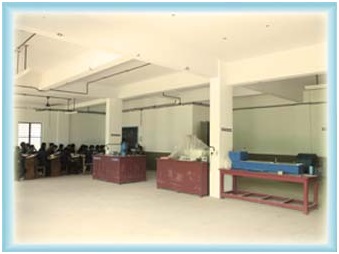
Transportation Engineering Lab
For better construction and suitability of road, the engineering properties and behaviour of highway materials are essential. This lab deals with the techniques to determine the various properties of the vital highway material; the aggregate and bitumen. The various tests include Los Angeles Abrasion test, crushing strength, Impact test, Specific gravity of aggregates, Angularity Number etc. for aggregates and Ductility test, Specific gravity test, Penetration test, Softening point test, Flash and fire point test etc. for bitumen.
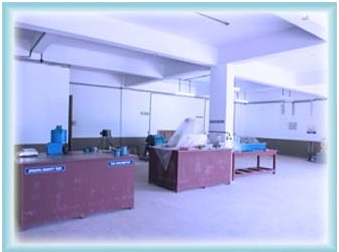
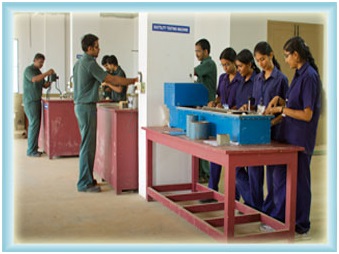
Impact testing machine, Los Angeles Abrasion testing machine, Flash and fire point testing machine; Marshal Equipment etc. are some of the instruments of this lab.
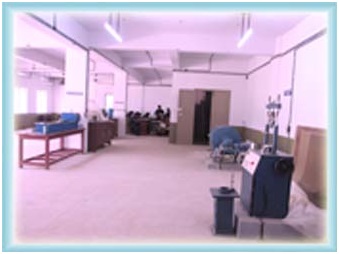
Geo Technical Lab
Geotechnical engineering is the branch of civil engineering which deals with the engineering behavior of earth materials. It uses principles of soil mechanics and rock mechanics.
- To determine the subsurface conditions and materials
- To determine their engineering behaviour
- To assess the risks posed by site conditions etc.
The Geotechnical engineering Laboratory has the machines and equipments to conduct various experiments for students to satisfy the academic curriculum. The laboratory helps in identifying the engineering behavior of geomaterials (soils and rocks) and byproducts. Geotechnical engineering laboratory has a great role to play in rendering the subsurface a safe and stable load bearing medium.
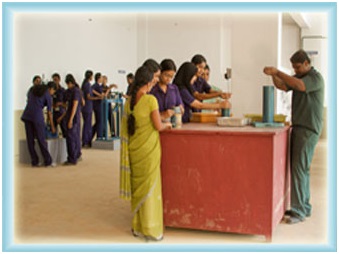
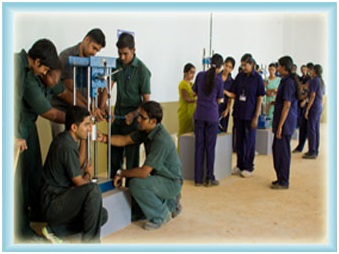
Some of the equipment housed in the Laboratory are:
- Unconfined Compression Test Apparatus: Measures the unconfined compression strength of a cylinder of cohesive or semi-cohesive soils and indirectly shear strength.
- California Bearing Ratio Test Apparatus: To evaluate the bearing capacity of soil for the flexible pavement design.
- Liquid Limit Apparatus (Casagrande's Apparatus): Used to determine the water content at which the soil changes from liquid state to plastic state.
- Consolidometer: Consolidation test conducted in a laboratory to study the compressibility of a soil.
- Direct Shear Apparatus: To determine the shear strength parameters.
- Variable Head Permeameter: Used to find the permeability which indicates the ease with which water will flow through the soil.
- Laboratory Vane Shear Apparatus: Used to determine the shear strength of saturated cohesive soils.
- Triaxial Testing Machine: Determination of shear characteristics of all types of soils under different drainage conditions.
Laboratory is also equipped with Compaction apparatus, Pycnometer, Apparatus for determining mass density, Hydrometer etc.
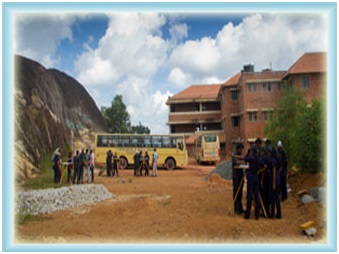
Survey Lab
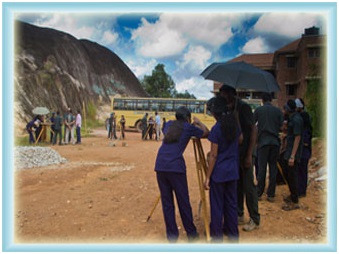
This lab deals with imparting basic knowledge; about the various surveying and leveling instruments, their working and field operations; to the students. The instruments available include Transit Theodolite, Dumpy Level, Levelling Staff, Plane Table and its accessories, Prismatic Compass, cross Staff, ranging rods, Chains etc.
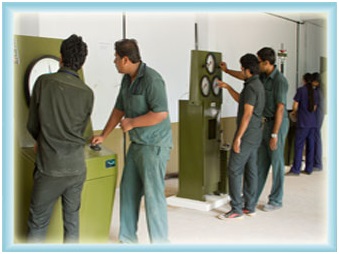
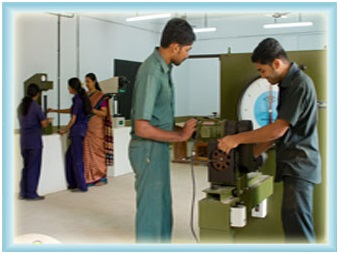
Strength of Materials Lab
This lab is well equipped with facilities for testing the properties of various materials like brass, mild steel, aluminum etc. The machines include 400 KN Universal testing Machine (UTM), Brinell and Rockwell Hardness Testing Machines, Izod and Charpy Impact Testing Machines, Torsion Testing Machine, Spring Testing Machine for open and close coiled springs etc.
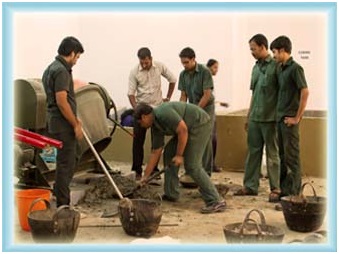
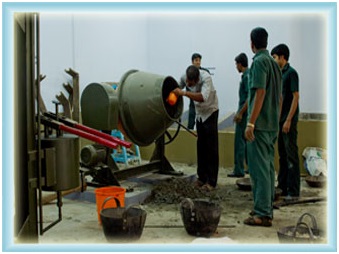
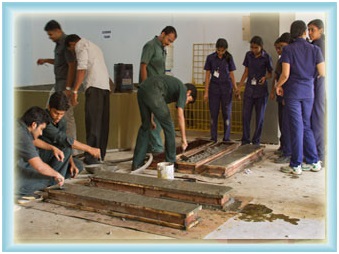
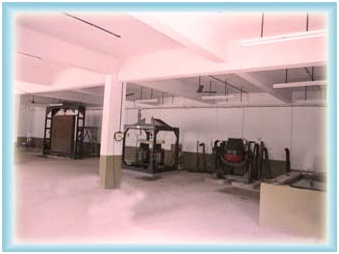
Structural & Construction Lab
Construction engineering laboratory of civil engineering department is well equipped with latest testing facilities. Equipments housed in the lab are:
- Loading Frame (100 tones)
- Loading Frame (40 tones) {Half Back Capacity}
- Concrete Mixer
- Vibration Isolator
- Horizontal Shake Table Apparatus
Department Faculties
Our highly qualified and experienced faculty members:
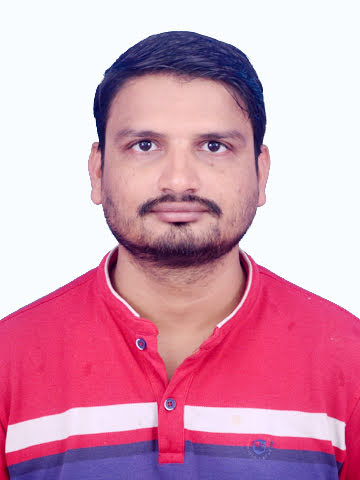
MR. PURUSHOTTAM JHA
- Designation
- H.O.D.
- Qualification
- M.TECH
- Experience
- 4 Year
- Teaching Area
- CIVIL ENGINEERING
- Contact
- 7050493464
- purujha27@gmail.com
MR. RAJA KUMAR

- Designation
- Lecturer
- Qualification
- B.TECH
- Experience
- Teaching Area
- CIVIL DEPARTMENT
- Contact
- 7061207530
- rajakumarias@gmail.com
MR. KAVIRANJAN KUMAR
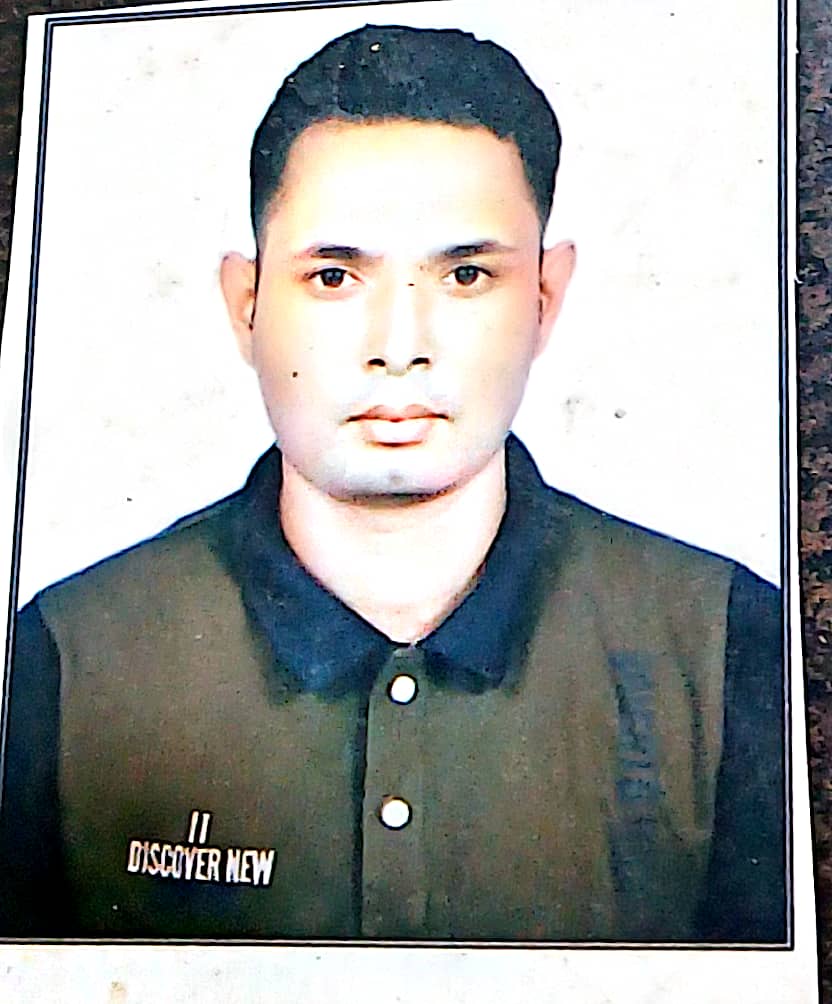
- Designation
- Lecturer
- Qualification
- M.TECH
- Experience
- 1
- Teaching Area
- CIVIL DEPARTMENT
- Contact
- 7631272192
- kaviranjancivil@gmail.com
MR. ADITYA BINAYA
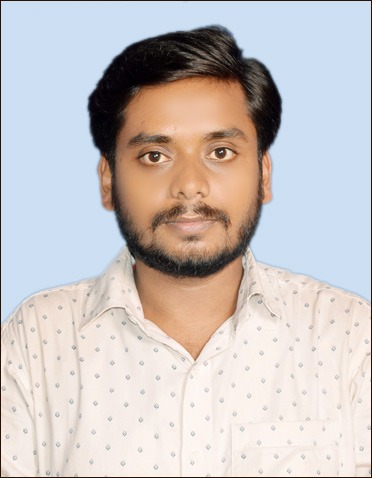
- Designation
- Lecturer
- Qualification
- M.TECH
- Experience
- 1
- Teaching Area
- CIVIL DEPARTMENT
- Contact
- 8809945115
- adityabinayacivil@gmail.com
MR. BISHNU DEV CHAND
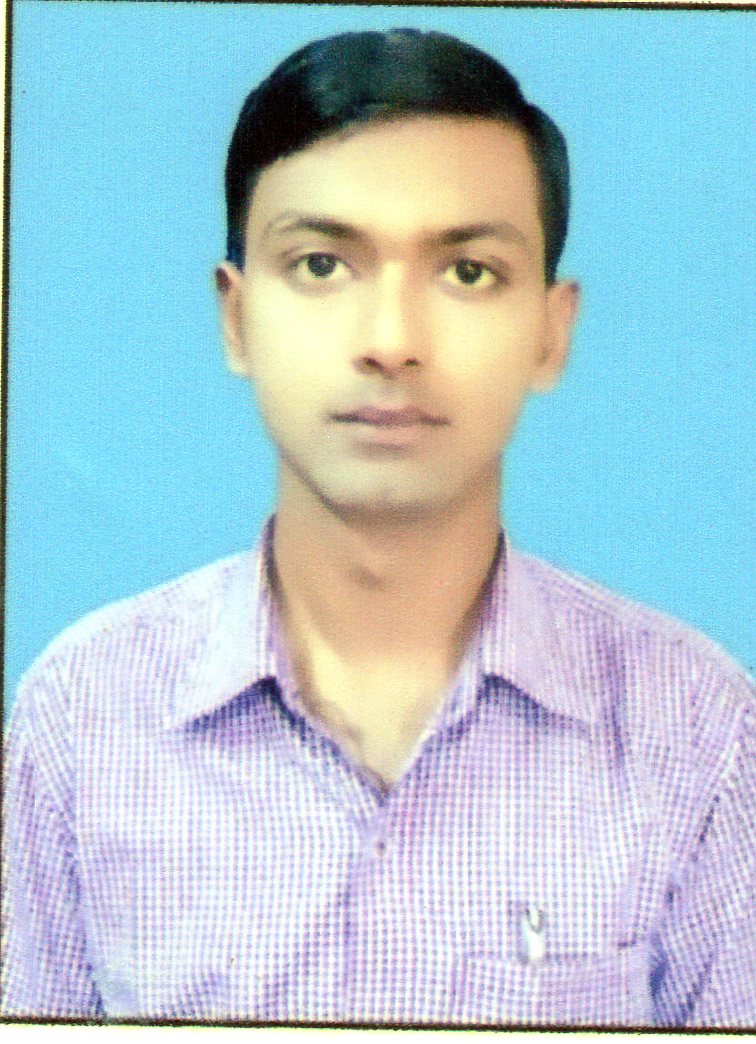
- Designation
- Lecturer
- Qualification
- B.TECH
- Experience
- Teaching Area
- CIVIL DEPARTMENT
- Contact
- 6205715572
- devbishnu999@gmail.com
MR. BISHNU DEV CHAND
- Designation
- Lecturer
- Qualification
- B.TECH
- Experience
- Teaching Area
- CIVIL DEPARTMENT
- Contact
- 6205715572
- devbishnu999@gmail.com
MR. RAJA KUMAR
- Designation
- Lecturer
- Qualification
- B.TECH
- Experience
- Teaching Area
- CIVIL DEPARTMENT
- Contact
- 7061207530
- rajakumarias@gmail.com
MR. KAVIRANJAN KUMAR
- Designation
- Lecturer
- Qualification
- M.TECH
- Experience
- 1
- Teaching Area
- CIVIL DEPARTMENT
- Contact
- 7631272192
- kaviranjancivil@gmail.com
MR. ADITYA BINAYA
- Designation
- Lecturer
- Qualification
- M.TECH
- Experience
- 1
- Teaching Area
- CIVIL DEPARTMENT
- Contact
- 8809945115
- adityabinayacivil@gmail.com